
Open Pores Treatment in Dubai: Causes, What Helps and What the Evidence Says
Open Pores Treatment in Dubai: Causes, What Helps and What the Evidence Says
“Open pores” is the phrase most people use for the small, visible openings on the nose and cheeks that stand out in daylight and in photographs. The concern is common, and it attracts exaggerated promises: serums that “close” pores, devices that “erase” them, and facials that “shrink” them in an hour.
The accurate picture is less dramatic. A pore is a normal opening where a hair follicle and its oil gland reach the surface, and its basic size is strongly influenced by genetics. What can change is how visible it looks, which depends on oil, debris and the firmness of the surrounding skin. This guide covers what drives each, what helps at home, what the evidence says about clinic treatments in Dubai, and where the risks lie, especially pigmentation in deeper skin tones.
Why Pores Look Larger
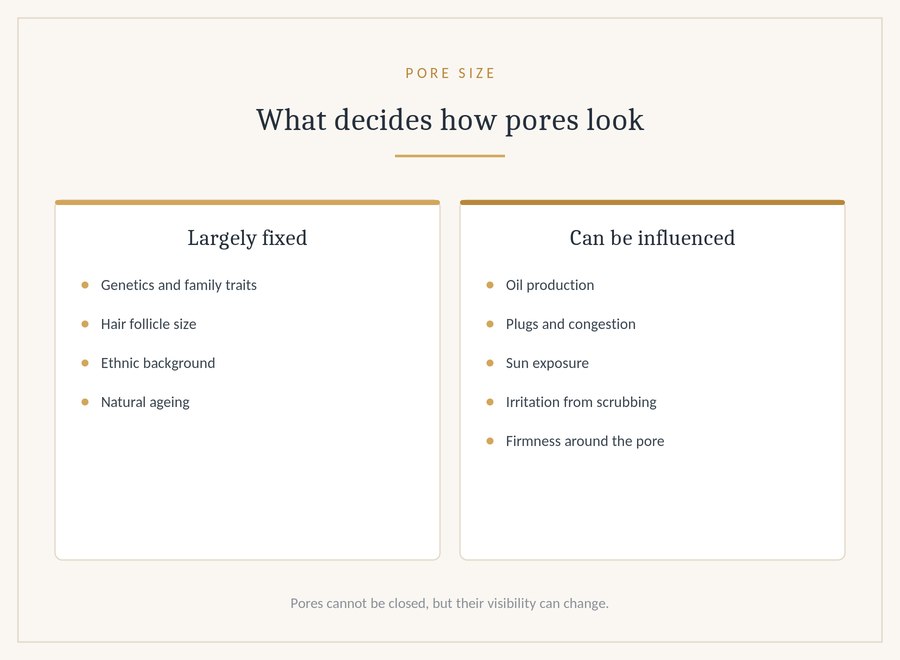
A pore does not grow the way a spot does. It looks larger when one or more of the following is happening, and many people have several at once.
Oil production. Oil (sebum) reaches the surface through the pore, and the link between oil output and pore size is well established. Hormones influence oil output, so in some women pores look larger around ovulation.
Genetics and skin type. Genetics shapes pore and follicle size, and oily skin types usually show larger pores, particularly on the nose and cheeks. A study of more than 2,500 women from five ethnic groups found that pore size and density differed widely between groups. None of this can be changed.
Sun damage, ageing and loss of firmness. Years of ultraviolet exposure break down the collagen and elastin that hold the skin around each opening taut, so the opening looks wider. Oil output changes little through most of adult life, but pores often look larger in the forties and fifties as the skin loosens.
Congestion and acne. When oil and dead skin cells plug a pore, the plug stretches it, and a blackhead is a plug that has darkened at the surface. Acne inflammation can also weaken the follicle wall. When acne is the main driver, treating it comes first, as set out in the guide to acne treatment.
Heat, Humidity and Dubai
Oil output rises as the skin warms, and sweat, dust, sunscreen and makeup can contribute to congestion, so blocked pores can be a particular problem in a hot climate. Ultraviolet exposure is strong for much of the year and is the main long-term driver of lost firmness. The evidence on climate is mixed, though: a very large image-analysis study in China linked cooler, drier conditions and strong sun with more visible cheek pores. The practical points are daily sunscreen, a non-comedogenic routine and gentle cleansing after sweating.
Pores Cannot Be Closed, but They Can Look Smaller
Pores have no muscle that opens or closes them. Steam does not open a pore and cold water does not close one; heat softens oil and cold briefly tightens the look of the skin, but the structure is unchanged. Anything sold as closing or removing pores promises more than the evidence supports.
What treatment can change is appearance: less oil at the surface, fewer plugs and firmer surrounding skin. These improvements are real but partial, and they fade when treatment stops. Most studies are small, many have no comparison group and there is no standard way to measure pore size, so results are indications rather than promises.
Daily Care That Helps
Most visible improvement comes from a consistent home routine, which also helps any clinic treatment last.
Gentle Cleansing and Sunscreen
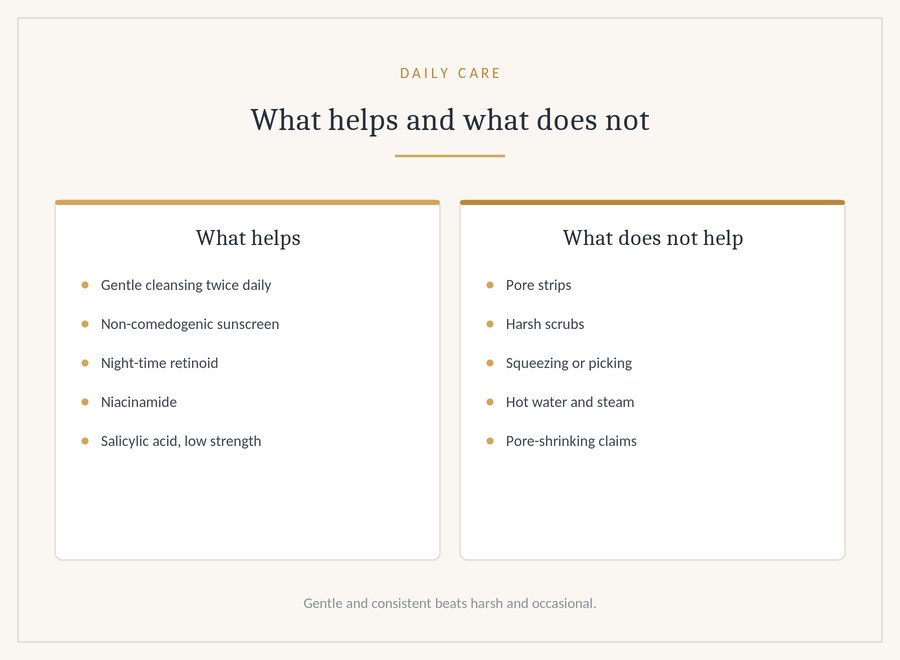
Washing twice a day with a gentle, non-comedogenic cleanser and lukewarm water removes surface oil and makeup without irritation, which matters because inflamed skin makes pores look more noticeable. Sunscreen protects the collagen that supports the pore. Choose a broad-spectrum, non-comedogenic product of SPF 30 or higher, reapply outdoors and remove it fully each evening.
Retinoids
Retinoids, which are vitamin A derivatives, have the most consistent support. They loosen the cells that plug pores and encourage collagen. In a 24-week placebo-controlled trial of 568 people, 42 per cent using a prescription retinoid cream improved by at least one grade in pore appearance, against 20 per cent on placebo, although part of that benefit may come from clearing plugs. Expect dryness and flaking at first, so start two or three nights a week, moisturise and use sunscreen every morning. Retinoids are not used in pregnancy or while breastfeeding, and prescription strengths need a physician’s guidance.
Niacinamide and Salicylic Acid
Niacinamide (vitamin B3) is generally well tolerated and modestly effective: a 2 per cent product reduced oil output within two to four weeks in a placebo-controlled trial, and small trials of 4 per cent products report fewer visible pores after about eight weeks. Salicylic acid is oil-soluble, so it works inside the pore lining to loosen plugs, and low-strength cleansers and leave-on products suit regular use. Introduce one new active at a time, because irritation defeats the purpose.
What Does Not Help
Pore strips. They lift surface debris and the tips of sebaceous filaments, the pale threads inside pores that carry oil and are a normal part of skin. The pores refill within about a month, and repeated use can irritate.
Harsh scrubs. Scrubbing does not clean more deeply; it irritates, and irritation makes pores look larger.
Squeezing and picking. Pressure inflames the follicle and can leave marks or scars, and in deeper skin tones the marks are slow to fade.
Hot water and steam. Neither changes the structure of a pore, and very hot water irritates.
“Pore-shrinking” claims. Toners, primers and masks can blur the surface or absorb oil for a few hours, but they do not change the pore.
Open Pores Treatment in Dubai: What the Evidence Shows
When home care has plateaued, clinic treatments can add to it. The choice depends on the cause: in younger, oily skin the aim is to control oil and congestion, while in older, sun-damaged skin it is also to rebuild support around the pore. A 2023 review of 19 clinical trials drew the same distinction. The studies are small, so what follows describes indications, not promises.
Chemical Peels
Salicylic acid peels suit oily, congested skin because they work inside the follicle, while glycolic acid smooths the surface. In a study of 22 women, a 30 per cent glycolic acid peel every two weeks for five sessions reduced the appearance of open pores, with more than 70 per cent improving, although the effect is modest and fades without maintenance. Depth and agent must be matched to skin type, as explained in the guide to chemical peels.
Microneedling
Medical microneedling creates tiny channels in the skin and triggers collagen remodelling around the follicle, which makes sense when pores look wide because the surrounding skin has lost support. Evidence for pores specifically comes from small studies, often combined with other agents. A course is usually three to six sessions about four weeks apart.
Micro-Botox
Micro-Botox means very dilute botulinum toxin placed as many tiny droplets within the skin, not the muscle, which makes it different from the technique described in the guide to baby Botox. The proposed mechanism is that the toxin blocks nerve signals that stimulate oil glands, though this is not fully established. A 2024 pooled analysis of ten small studies, with 153 participants, reported less oil and smaller measured pores, but its authors called for better-quality trials. Benefit is generally reported for around three to four months.
Using botulinum toxin for oil and pores is off-label, so it rests on the physician’s judgement and your informed consent. Common effects are pain, bruising and small bumps. If toxin spreads to a nearby muscle, a smile can look uneven or a brow or eyelid feel heavy for some weeks, which is why placement stays superficial and doses small.
Skin Boosters
Skin boosters place hyaluronic acid or similar ingredients into the upper skin to improve hydration, so any effect on pores is indirect. A small split-face trial of superficial hyaluronic acid injections reported reduced pore volume after three sessions four weeks apart, though without an untreated comparison side. In another trial, adding hyaluronic acid to micro-Botox gave no extra benefit at six months, and temporary lumps were common. Boosters tend to suit drier, ageing skin better than oily skin; the products are compared in the guide to NCTF skin boosters.
Energy-Based Devices
Fractional lasers, radiofrequency microneedling and focused ultrasound deliver controlled heat to tighten collagen and calm oil glands. Small studies, many without control groups, report lower pore scores after a series of sessions. Because heat is the mechanism, these devices carry the highest risk of pigmentation in deeper skin tones, so device, settings and spacing must be matched to the skin.
Combining Treatments
Because pores have more than one driver, plans usually pair a daily routine with one clinic treatment, and sometimes a second in sequence: for example a retinoid and sunscreen at home, a course of superficial peels for congestion, then microneedling or micro-Botox if oil or lost support remains. Sessions are spaced weeks apart rather than stacked on one day, because combined inflammation raises the pigmentation risk and hides which step helped. Reviews find that combinations tend to do better, but trials are few and small.
Risks and Who Should Avoid Treatment
Pigmentation in Deeper Skin Tones
The main risk of peels, microneedling and heat-based devices is post-inflammatory hyperpigmentation. Injured or inflamed skin makes extra pigment, leaving brown marks that can take months to fade and often show more than the pores being treated. The risk is higher in medium and deeper skin tones, which includes many people in Dubai. Precautions include assessing skin type and pigmentation history, conservative first settings, preparing the skin, avoiding sun before and after treatment and strict daily sunscreen. Superficial peels and modest-depth microneedling are generally better tolerated than medium-depth peels or high-energy devices, but no method is free of the risk. Other risks include irritation, infection, cold sore and acne flares, bruising and, rarely, scarring.
Who Should Avoid or Delay Treatment
Treatment is usually postponed during pregnancy and breastfeeding, and when there is an infection, cold sore, eczema or sunburn in the treated area. A tendency to keloid scarring also calls for caution. Recent oral isotretinoin calls for a pause: many clinicians wait about six months before microneedling or deeper treatments, although expert guidance suggests some superficial treatments need not be delayed, so the physician decides. Blood-thinning medicines increase bruising, and botulinum toxin is avoided in neuromuscular conditions such as myasthenia gravis and with allergy to the product. Persistent oiliness with acne, irregular periods or excess hair growth deserves medical review, because hormonal conditions can be involved. Suitability must be assessed in person by a licensed physician.
Realistic Expectations and Timelines
A realistic goal is pores that look smaller and skin that looks smoother and less shiny, not pores that disappear. Retinoids and niacinamide take eight to twelve weeks. Peels are usually four to six sessions two to four weeks apart, and microneedling three to six sessions about four weeks apart, with change building between weeks four and twelve. Micro-Botox acts over a few weeks and fades over three to four months. Most results need maintenance, and pores drift back towards baseline when treatment stops. Photograph your skin before starting, in the same lighting each time, because flash and strong overhead light exaggerate pores.
Cost in Dubai
Market rates generally run from around AED 500 to AED 1,200 per superficial peel and from around AED 800 to AED 1,800 per medical microneedling session. Micro-Botox generally runs from around AED 1,000 to AED 3,000 per session and skin boosters from around AED 900 to AED 2,000. Radiofrequency microneedling and laser sessions commonly run from around AED 1,500 to AED 5,000. Because most plans are courses, compare the full course price and what it includes.
The Short Version
Pores are the normal openings of hair follicles. They cannot be closed or removed, but they can look smaller when oil is controlled, plugs are cleared and the surrounding skin stays firm. Gentle cleansing, a non-comedogenic sunscreen, a retinoid, niacinamide and salicylic acid do most of the work, while pore strips, scrubs and picking do not help.
Peels, microneedling, micro-Botox, skin boosters and devices each have small-study evidence, and the right choice depends on whether oil, congestion or lost firmness is the cause. In medium and deeper skin tones the main risk is pigmentation, so conservative settings and daily sun protection matter. Expect partial improvement that needs maintenance, and an in-person assessment by a licensed physician first.
Questions Worth Asking
What is making my pores look large? The answer should come from examining your skin, because oil, congestion and lost firmness need different plans.
What improvement is realistic, and how will we judge it? Expect smaller-looking pores, not closed ones, judged with photographs in matching light.
How will you protect my skin from pigmentation? Look for preparation, conservative first settings and clear sun-protection advice.
What is the evidence for this treatment, and is it off-label? An honest answer admits the studies are small and that micro-Botox for pores is off-label.
Frequently Asked Questions
Can open pores be closed for good?
No. Pores are normal openings with no muscle to open or close them, and their basic size is strongly influenced by genetics. Treatment can make them look smaller, but results need maintenance.
What makes pores look larger?
Oil production, genetics and follicle size, sun damage, loss of firmness and congestion from plugs or acne. Irritation from scrubbing or picking can make them look larger still.
Do pore strips, scrubs and toners work?
Not in a lasting way. Strips lift surface debris but pores refill within about a month, scrubs and picking irritate the skin, and toners may only blur the surface briefly.
Which skincare ingredients help open pores?
Retinoids have the most consistent evidence, followed by niacinamide and salicylic acid, with a non-comedogenic sunscreen alongside. Allow eight to twelve weeks, and avoid retinoids in pregnancy and breastfeeding.
Does micro-Botox help open pores?
Small studies and a 2024 pooled analysis report less oil and smaller measured pores for around three to four months. The evidence is limited, the use is off-label, and toxin spread can cause an uneven smile.
Is microneedling or a chemical peel better for pores?
Neither is better in general. Peels suit oily, congested skin, while microneedling suits pores that look wide because the surrounding skin has lost support. Both are courses and need conservative settings in deeper skin tones.
Do skin boosters or energy-based devices help?
Small trials report smaller measured pores, but the evidence is early. Boosters act indirectly through hydration, and heat-based devices carry a higher risk of pigmentation in deeper skin tones.
How long do results take and last?
Skincare takes eight to twelve weeks. Peels and microneedling are courses with change building over weeks to months, and micro-Botox fades in three to four months. Most results need maintenance.
Can pore treatments cause pigmentation in darker skin?
Yes. Peels, microneedling and heat-based devices can trigger post-inflammatory hyperpigmentation in medium and deeper skin tones. Assessment, preparation, conservative settings and daily sunscreen reduce the risk but do not remove it.
What does it cost in Dubai?
Market rates generally run from around AED 500 to AED 1,200 per superficial peel, AED 800 to AED 1,800 per microneedling session and AED 1,000 to AED 3,000 per micro-Botox session. Most plans involve a course.
This article is general information about aesthetic and dermatological treatments and is not medical advice, a diagnosis, or a treatment recommendation for any individual. Outcomes vary between patients and no result is guaranteed. Prescription medications and injectable products carry risks and contraindications that must be assessed by a licensed physician during a personal consultation. Dr Soheila Eskandari is licensed by the Dubai Health Authority. Prices quoted are general market ranges for information only and are not an offer.


 English
 Arabic