
Lip Filler Aftercare in Dubai: The First 48 Hours, Two Weeks and Warning Signs
Lip Filler Aftercare in Dubai: The First 48 Hours, Two Weeks and Warning Signs
Lip filler aftercare in Dubai is mostly about protecting the lips for the first two days: keep them clean, avoid pressure, make-up, intense heat, strenuous exercise and alcohol for around 24 to 48 hours, and use cold compresses for swelling. Swelling usually peaks on the second or third day and settles over one to two weeks, while severe pain, pale or dusky skin, or changes in vision are warning signs that need the clinic straight away.
This guide sets out what to do in the first hour, the first day, the first week and the following weeks, what is normal and what is not, how to manage swelling and bruising, when you can return to exercise, travel, dental work and other treatments, and when to contact your physician. Advice differs between clinics and between people, so follow the written instructions you are given, and remember that a licensed physician must assess anything unusual in person.
Why Does Aftercare Matter After Lip Filler?
Hyaluronic acid filler is a gel that sits in the lip tissue and draws in a little water after injection. In the first days the tissue is swollen, the gel can still be moved by firm pressure, and the tiny injection points in the skin are still closing. Good aftercare reduces swelling and bruising, lowers the chance of infection, helps the gel settle evenly and makes it easier to judge the result fairly at the review.
Aftercare cannot change the volume used, the product chosen or the placement, which are decided during treatment. It also cannot prevent every complication. Its role is to give the lips good conditions to heal and to make sure that any rare problem is noticed early.
What Should I Do in the First 24 Hours?
The first hour
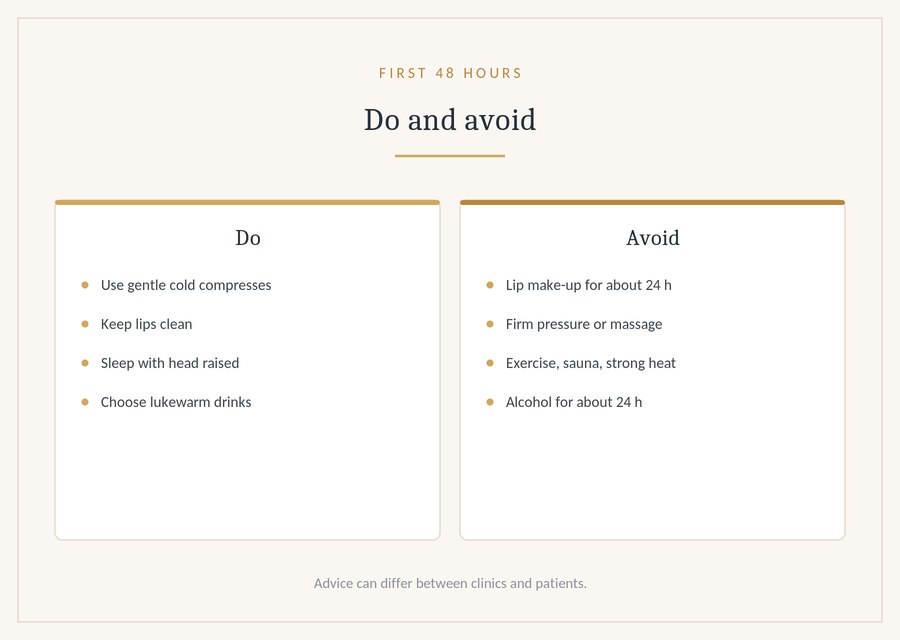
Lips usually look fuller than the final result straight after treatment, and small bumps at injection points are common. A cold compress, such as a clean cloth wrapped around an ice pack, applied gently for a few minutes at a time, can reduce swelling. Avoid pressing hard or massaging unless your physician has specifically asked you to. If a numbing cream or lidocaine was used, your lips may feel numb for an hour or two, so take care with hot drinks and avoid biting your lip.
Eating and drinking
You can usually eat and drink once the numbness wears off. Choose lukewarm rather than very hot food and drinks on the first day, and drinking from a cup is often more comfortable than using a straw, which needs pursing of the lips. Very salty or spicy food can make swelling feel worse for some people.
Make-up, lip products and touching
Avoid lipstick, lip liner and other lip products for around 24 hours, because the injection points are small open wounds and products can carry bacteria into them. Wash your hands before touching your face and keep touching to a minimum. A plain, clean lip balm is often allowed after the first day; ask what your clinic recommends.
Exercise, heat and alcohol
Strenuous exercise, saunas, steam rooms, hot baths and long periods in strong sun increase blood flow and can make swelling and bruising worse, so they are usually avoided for 24 to 48 hours. In Dubai, that includes long periods outdoors in the midday heat. Alcohol widens blood vessels and can also increase swelling and bruising, so most physicians suggest avoiding it for at least 24 hours.
Sleeping
Sleeping with your head slightly raised on an extra pillow for the first night or two can help swelling drain. Try to sleep on your back rather than face down, so that the lips are not pressed into the pillow.
What Is Normal in the First Week?
Swelling
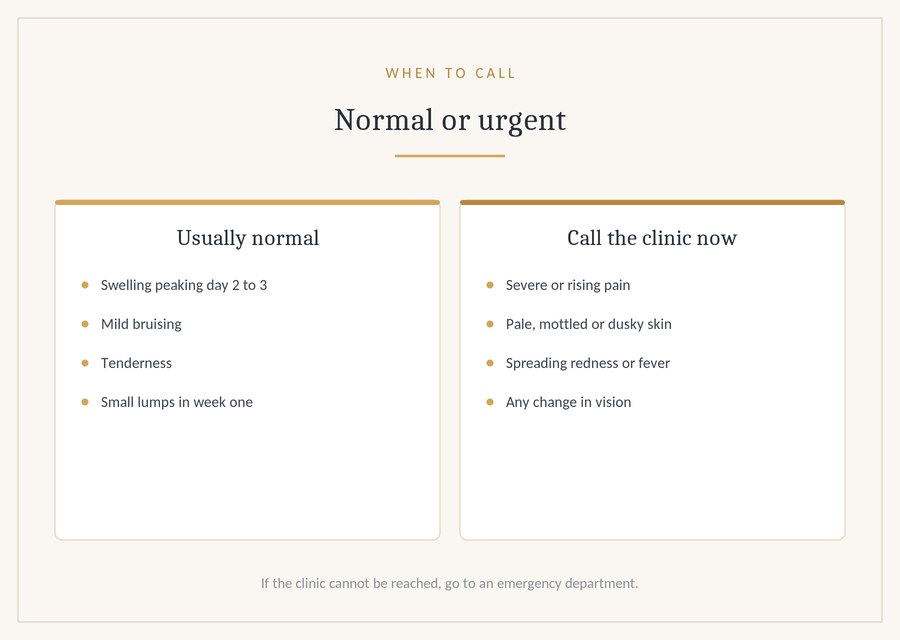
Swelling is the most common effect after lip filler. It usually increases over the first day, peaks around the second or third day, and then settles gradually over one to two weeks. It is often uneven, with one side or one part of the lip more swollen than the other, and the lips can feel firm or tight. Our guide to lip filler swelling describes the typical timeline in detail.
Bruising
Bruising appears in some people, depending on the number of injection points, the use of a needle or blunt cannula, and how easily they bruise. It usually fades over several days to a week or so. Make-up can generally be used to cover a bruise around, but not on, the lips once the first day has passed.
Tenderness and small lumps
Lips are often tender for a few days. Small lumps or an uneven feel are common in the first week, especially before swelling settles, and most soften as the gel integrates with the tissue. A lump that persists beyond two weeks, becomes painful, red or hot, or is clearly visible should be checked.
Why you should not judge the result too early
Because swelling distorts the shape, the result in the first week is not the final result. Many people feel their lips are too large on day two and then find they look as planned at two weeks. This is why a review at around two weeks is usually arranged, and why any extra filler is added only after swelling has fully settled. Our article on natural lip filler explains how small, staged volumes help avoid an overfilled look.
What Should I Avoid in the First Two Weeks?
Pressure and massage
Avoid firm pressure on the lips, such as pressing them together hard, sleeping face down or kissing firmly, for the first day or two. Do not massage lumps yourself unless your physician has shown you how and asked you to, because pressing in the wrong place can move the gel.
Dental work and facial treatments
Dental treatment involves stretching the mouth and, for some procedures, a small risk of introducing bacteria into the bloodstream. Many physicians advise leaving around two weeks between lip filler and routine dental work, and telling your dentist that you have had filler. Facials, facial massage, peels, laser treatments and microneedling around the mouth are usually postponed for about two weeks as well.
Flying and travel
There is no strong evidence that flying harms filler, but cabin pressure and dry air can make swelling feel more noticeable, and you may be far from your clinic if a problem arises. If you are travelling soon after treatment, discuss timing with your physician and make sure you know how to contact the clinic.
Cold sores
Injections around the mouth can trigger a cold sore in people who get them. If you have had cold sores before, tell your physician at the consultation, as they may recommend antiviral medicine before treatment. If a cold sore appears after filler, contact the clinic rather than treating it alone, because infection near fresh filler needs medical advice.
How Can I Reduce Swelling and Bruising?
Several simple steps can help. Gentle cold compresses in the first day or two, used for a few minutes at a time with a cloth between the ice and the skin, reduce swelling. Keeping your head raised at night helps fluid drain. Avoiding alcohol, intense exercise and heat for a day or two limits extra blood flow to the area. If you take supplements that can increase bruising, such as fish oil, vitamin E or some herbal products, ask your physician before treatment whether to pause them; never stop a prescribed medicine, such as a blood thinner, without advice from the doctor who prescribed it.
Some people use arnica or bromelain for bruising, but the evidence for them is limited, and they should only be used if your physician agrees. Simple pain relief such as paracetamol is usually suitable for tenderness, while anti-inflammatory medicines may be discouraged by some clinics in the first day because they can increase bruising; check which your clinic advises.
Is Aftercare Different in Dubai’s Climate?
Heat, strong sun and dry air-conditioned rooms all affect healing skin. In the first two days, avoid long periods outdoors in the hottest part of the day, beach and pool afternoons, and hot yoga or outdoor training. Drinking enough water and using a plain lip balm after the first day help with dryness. Once the injection points have healed, a lip balm with SPF protects the delicate skin of the lips from sun damage throughout the year.
Which Symptoms Need Urgent Attention?
Signs of a blocked blood vessel
Rarely, filler can enter or press on a blood vessel. This is the most serious complication and needs treatment as soon as possible, usually with the enzyme hyaluronidase. Warning signs include severe or increasing pain that is out of proportion to normal tenderness, skin that turns pale, white, mottled, blue or grey, a patch of skin that feels cold, and, very rarely, changes in vision. If you notice any of these, contact your clinic immediately; if you cannot reach them, go to an emergency department.
Signs of infection or a reaction
Redness that spreads, increasing heat, pus, a fever, or swelling that worsens after the third day rather than improving can indicate infection and need prompt review. Delayed swelling or firm lumps that appear weeks or months later, sometimes after an illness, can be an inflammatory reaction and also need medical assessment. Allergic reactions, such as hives, widespread swelling or difficulty breathing, need emergency care.
What Happens at the Review Appointment?
A review at around two weeks lets the physician see the settled result, check for lumps or unevenness and answer questions. If the lips are slightly uneven, a small top-up may be suggested; if a lump has not softened, the physician may massage it, watch it or, for hyaluronic acid filler, dissolve a small amount with hyaluronidase. Our guide to dissolving filler explains how that works. The review is also a good moment to take photographs to compare with your before pictures.
How Can I Help My Result Last?
Lip filler is gradually broken down by the body, and the lips move constantly, so results usually last around six to twelve months. Protecting your lips from strong sun with a lip balm containing SPF, not smoking and keeping the lips moisturised help the skin of the lips, though they do not stop filler from being broken down. Top-ups should be planned after an assessment of what remains rather than on a fixed schedule. Our articles on how long lip filler lasts and how long fillers last in each area explain the factors involved.
Who Should Avoid Lip Filler?
Lip filler is usually postponed during pregnancy and breastfeeding, during an active cold sore or infection around the mouth, and around major dental work. It is avoided in people with a known allergy to the product or to lidocaine. People with autoimmune conditions, bleeding disorders, those taking blood-thinning medicines and those who have had previous filler complications need a careful assessment first. A licensed physician must confirm suitability in person.
Choosing Who Treats You
Lip filler should be performed by a licensed physician whose DHA licence you can verify on the DHA Sheryan portal and who treats lips regularly. Before treatment, ask for written aftercare, a review appointment and a direct way to reach the clinic, including outside working hours, if you notice warning signs. The clinic should have hyaluronidase available.
The overview of lip filler treatment describes how lips are assessed and treated. At dr-soheila.com, treatments are planned and performed by Dr Soheila Eskandari, a DHA-licensed general practitioner with aesthetic privileges with 20 years of experience in aesthetic medicine.
The Short Version
For the first 24 to 48 hours after lip filler, keep the lips clean, use gentle cold compresses, avoid make-up on the lips, firm pressure, strenuous exercise, saunas, strong heat and alcohol, and sleep with your head slightly raised. Swelling usually peaks on day two or three and settles over one to two weeks, so the result is judged at a review around two weeks after treatment.
Leave about two weeks before dental work or facial treatments around the mouth, and tell your physician if you get cold sores. Severe pain, pale or dusky skin, spreading redness, fever or any change in vision need the clinic urgently. Results usually last six to twelve months, and a licensed physician must assess suitability and any concern in person.
Questions Worth Asking
Will I get written aftercare instructions? Clear written advice helps you follow the same plan the physician expects.
How do I reach the clinic if something feels wrong? You should have a direct contact, ideally including outside working hours.
When is my review appointment? A review at around two weeks allows the result to be judged after swelling settles.
Should I take anything for cold sores before treatment? If you get cold sores, ask whether antiviral medicine is recommended.
Frequently Asked Questions
What should I do right after lip filler?
Use gentle cold compresses for swelling, avoid pressing or massaging the lips unless asked to, take care with hot drinks while numb, and keep the lips clean.
How long does lip filler swelling last?
Swelling usually peaks around the second or third day and settles over one to two weeks, although small changes can continue a little longer.
When can I wear lipstick after lip filler?
Most physicians advise avoiding lipstick and lip products for around 24 hours, because the injection points are still healing.
When can I exercise after lip filler?
Strenuous exercise is usually avoided for 24 to 48 hours, because it increases blood flow and can worsen swelling and bruising.
Can I drink alcohol after lip filler?
Most physicians suggest avoiding alcohol for at least 24 hours, as it can increase swelling and bruising.
Is it normal to have lumps after lip filler?
Small lumps are common in the first week and usually soften; a lump that persists beyond two weeks, becomes painful or is visible should be checked.
When can I go to the dentist after lip filler?
Many physicians suggest waiting around two weeks before routine dental work and telling your dentist that you have had filler.
What are the warning signs after lip filler?
Severe or increasing pain, pale, mottled or dusky skin, spreading redness, fever or any change in vision need urgent contact with the clinic or emergency care.
When will I see the final result of lip filler?
The settled result is usually visible at around two weeks, which is when a review is commonly arranged.
What does lip filler cost in Dubai?
Market rates generally run from around AED 1,000 to AED 2,000 per 1 ml syringe, depending on the product and the clinic; a subtle plan may use half a syringe or one, so ask for a written quote.
This article is general information about aesthetic and dermatological treatments and is not medical advice, a diagnosis, or a treatment recommendation for any individual. Outcomes vary between patients and no result is guaranteed. Prescription medications and injectable products carry risks and contraindications that must be assessed by a licensed physician during a personal consultation. Dr Soheila Eskandari is licensed by the Dubai Health Authority. Prices quoted are general market ranges for information only and are not an offer.


 English
 Arabic