
Dark Underarms Treatment in Dubai: Causes, Medical Checks and What Actually Helps
Dark Underarms Treatment in Dubai: Causes, Medical Checks and What Actually Helps
Darker skin in the underarms, the inner thighs and the bikini line is extremely common, particularly in warm climates and in medium to deeper skin tones. It is also one of the concerns people feel most self-conscious about, which makes it an easy target for products that promise dramatic whitening.
The useful approach starts somewhere less exciting: working out why the skin has darkened. The cause decides the treatment, and in a small but important number of people the darkening is a sign of something that needs medical attention rather than a cosmetic product.
Why These Areas Darken
Several causes are common, and many people have more than one.
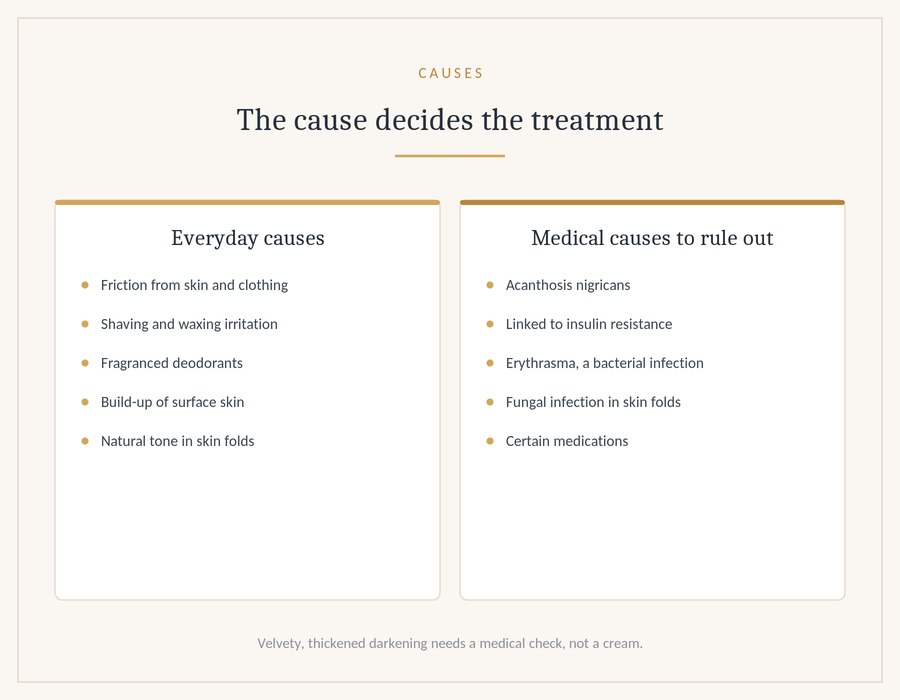
Friction. Skin rubbing against skin or tight clothing triggers low-grade irritation, and irritated skin produces more pigment. Heat and sweat make this worse, which is why it is so common in Dubai.
Hair removal. Repeated shaving, waxing and plucking inflame the skin and leave behind darker marks, a process called post-inflammatory hyperpigmentation. In some people the dark appearance is partly the shadow of hair just below the surface after shaving.
Deodorants and antiperspirants. Fragrance and some ingredients irritate sensitive skin, adding to the cycle.
Build-up of dead skin. A thicker surface layer can look darker and duller.
Natural skin tone. Folds and joints are often naturally a shade darker than surrounding skin. This is normal and does not need treating unless it bothers you.
Medical Causes Worth Ruling Out
Acanthosis nigricans. Velvety, thickened, darker skin in the underarms, neck or groin. It is strongly associated with insulin resistance and can be an early sign of pre-diabetes or type 2 diabetes. It is also linked with polycystic ovary syndrome, some medications and, rarely, other internal conditions. It is not treated by lightening the skin; it improves when the underlying cause is addressed, and a blood test for sugar and insulin is usually part of the assessment.
Erythrasma. A superficial bacterial infection that causes brownish, slightly scaly patches in skin folds. It shows a characteristic colour under a special lamp and responds to antibacterial treatment rather than to brightening products.
Fungal infection. Also common in warm, moist folds, often itchy, and treated with antifungal medication.
Examining the skin, asking about symptoms and, where appropriate, testing is therefore the first step. Treating acanthosis nigricans or an infection with a lightening cream wastes time and misses what matters.
What Actually Helps
Removing the Triggers
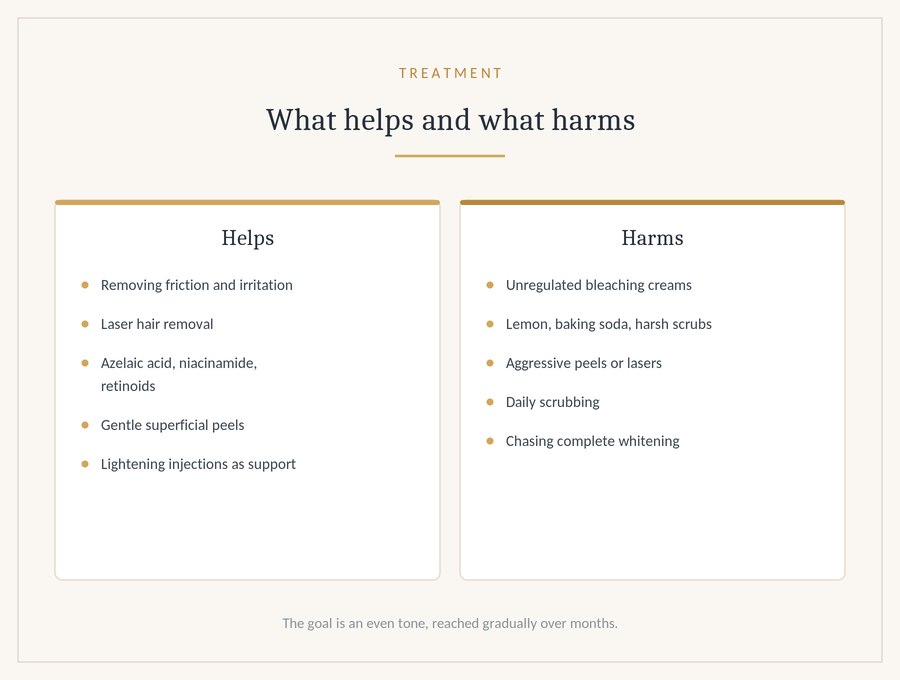
This is the foundation, and without it other treatments struggle. Changing the method of hair removal — for many people, laser hair removal ends the cycle of shaving irritation — along with loose breathable clothing, a fragrance-free deodorant and gentle cleansing often produces steady improvement on its own.
Topical Treatment
Several ingredients have reasonable evidence for reducing pigmentation, including azelaic acid, niacinamide, retinoids and gentle exfoliating acids. Stronger prescription agents may be used for defined periods under medical supervision. Progress is gradual, typically over eight to twelve weeks, and irritation must be managed carefully, because irritated skin darkens further.
Chemical Peels
Superficial peels suited to sensitive areas can speed up the turnover of pigmented surface cells. They must be chosen and timed carefully in deeper skin tones, where an overly aggressive peel can itself cause darkening. The broader principles are set out in the guide to chemical peels.
Lightening Injections
Injections into the affected skin — mesotherapy-style treatments that commonly use ingredients such as tranexamic acid, vitamin C or glutathione — are offered as an additional step. The evidence for these ingredients comes mainly from facial pigmentation studies; evidence specific to the underarms and groin is limited. They are best viewed as a supporting measure alongside trigger removal and topical care, not a replacement for them. The approach on the face is discussed in the guide to mesotherapy for pigmentation.
Laser and Light Treatments
Some lasers can reduce pigment, but in medium and deeper skin tones they carry a real risk of causing more pigmentation. They require careful device selection and settings, and are not a first step for most people.
What to Avoid
Unregulated bleaching creams. Products sold online or without a prescription have been found to contain mercury, strong steroids or high concentrations of other agents. These can thin the skin, cause stretch marks and permanent discolouration, and harm health beyond the skin. Anything promising rapid whitening deserves suspicion.
Home remedies that irritate. Lemon juice, baking soda and harsh scrubs inflame the skin, and inflamed skin darkens.
Aggressive treatment in a hurry. Pushing too hard with peels, lasers or strong actives is one of the most common ways the problem gets worse rather than better.
The Bikini Line and Inner Thighs
The same causes apply — friction, hair removal and irritation — and the same principles guide treatment. The skin here is often more sensitive, so gentler products and longer intervals are used, and treatment of the intimate area itself is approached with particular care. Chafing from exercise or clothing is often a major factor and is worth addressing directly.
What Realistic Improvement Looks Like
The realistic goal is a more even tone that blends with the surrounding skin, reached gradually over two to three months and maintained by keeping the triggers under control. Complete “whitening” is neither a realistic nor an appropriate goal, and a clinic that promises it is overpromising.
Where acanthosis nigricans is the cause, improvement follows treatment of the underlying condition, which can take longer but brings health benefits well beyond the skin.
Cost in Dubai
Costs depend on the plan. Market rates for superficial peels commonly run from around AED 400 to AED 1,000 per session, and lightening injection sessions from around AED 500 to AED 1,500, usually as a course. Laser hair removal is priced separately. Prescription topical treatment is often the least expensive part of the plan and one of the most important.
Daily Habits That Keep the Result
Because most darkening in these areas is driven by everyday irritation, the routine between clinic visits decides how well results last.
Hair removal. If shaving, use a sharp blade with a gentle gel, shave in the direction of hair growth and avoid dry shaving. Laser hair removal is the long-term solution for many people, because it ends the cycle altogether.
Deodorant. Fragrance-free products are less likely to irritate. Applying to completely dry skin, and not immediately after shaving, reduces stinging and inflammation.
Gentle exfoliation. A mild exfoliating product once or twice a week helps remove dull surface skin. Daily scrubbing does the opposite.
Clothing and moisture. Breathable fabrics and changing out of damp workout clothes promptly reduce friction and the warm, moist conditions in which infections thrive.
General health. Where insulin resistance plays a part, improvements in weight, activity and blood sugar often lighten the skin over time — a benefit that reaches far beyond appearance.
When to See a Doctor Promptly
Most darkening develops slowly and is harmless. It is worth seeing a doctor sooner if the darkening appears suddenly or spreads quickly, if the skin becomes velvety or thickened, if it itches, scales or has a clear edge, or if it appears alongside unexplained weight change, excessive thirst or tiredness. These features point towards causes that need medical treatment rather than cosmetic care.
The Short Version
Darkening of the underarms and skin folds is usually caused by friction, hair removal and irritation, and it improves when those triggers are removed and pigment is treated gently over several months. Velvety, thickened darkening may be acanthosis nigricans, which can signal insulin resistance and needs medical assessment, not a lightening product.
Peels, topical agents and lightening injections can help as part of a plan. Unregulated bleaching creams can cause lasting harm and should be avoided. The goal is an even tone, not whitening.
Questions Worth Asking
What is causing the darkening in my case? A proper answer comes after examining the skin.
Could this be acanthosis nigricans? If the skin is velvety or thickened, it is a reasonable question to ask.
What should I change at home? Hair removal, deodorant and clothing choices matter as much as any treatment.
What is in the injection, and what is the evidence for this area? An honest answer acknowledges that underarm-specific evidence is limited.
Frequently Asked Questions
Why are my underarms darker than the rest of my skin?
The most common reasons are friction, irritation from shaving or waxing, deodorant ingredients and a build-up of surface skin. Skin in folds is also often naturally a shade darker. Less commonly, a medical cause such as acanthosis nigricans or an infection is responsible.
What is acanthosis nigricans?
Velvety, thickened, darker skin in areas such as the underarms, neck or groin. It is strongly associated with insulin resistance and can be an early sign of pre-diabetes. It improves when the underlying cause is treated, so a medical assessment matters more than a lightening product.
Do lightening injections work for underarms?
They can support improvement as part of a wider plan, but evidence specific to the underarms is limited, since most research on these ingredients involves facial pigmentation. Removing triggers and consistent topical care remain the foundation.
Does laser hair removal help?
Often, yes. It ends the repeated irritation of shaving or waxing and removes the shadow of hair beneath the skin, which in many people is a significant part of the dark appearance.
Are whitening creams safe?
Unregulated creams have been found to contain mercury, strong steroids or excessive concentrations of other agents that can damage skin and health. Prescription treatments used under supervision are a safer route.
How long does improvement take?
Usually eight to twelve weeks for visible change with consistent treatment and trigger control, with maintenance afterwards.
Can the bikini line be treated the same way?
The same causes and principles apply, but the skin is more sensitive, so gentler products and longer intervals are used, and the intimate area itself is treated with particular care.
Can laser lighten the skin directly?
Some lasers target pigment, but in medium and deeper skin tones they carry a real risk of causing more pigmentation, so they are used selectively rather than as a first step.
Will the darkness come back?
It can, if friction, hair removal irritation or other triggers return. Keeping those under control is what maintains the result.
What does treatment cost in Dubai?
Market rates for superficial peels commonly run from around AED 400 to AED 1,000 per session, and lightening injection sessions from around AED 500 to AED 1,500, usually as a course. Laser hair removal is priced separately.
This article is general information about aesthetic and dermatological treatments and is not medical advice, a diagnosis, or a treatment recommendation for any individual. Outcomes vary between patients and no result is guaranteed. Prescription medications and injectable products carry risks and contraindications that must be assessed by a licensed physician during a personal consultation. Dr Soheila Eskandari is licensed by the Dubai Health Authority. Prices quoted are general market ranges for information only and are not an offer.


 English
  Arabic