
Microneedling With Growth Factors: What Is Actually Being Applied to Your Skin
Microneedling With Growth Factors: What Is Actually Being Applied to Your Skin
“Microneedling with growth factors” appears on almost every clinic menu in Dubai, usually at a premium over microneedling alone. What is rarely explained is that the phrase describes a category rather than a product. The serum applied after needling might be human fibroblast conditioned media, a plant-derived preparation, an exosome product, or your own platelet-rich plasma — and these differ enormously in what they contain, what the evidence says about them, and how they are regulated.
This guide explains what microneedling actually does, what the added growth factors contribute, which claims are supported and which are not, and the safety point that matters more than any of it.
What Microneedling Does on Its Own
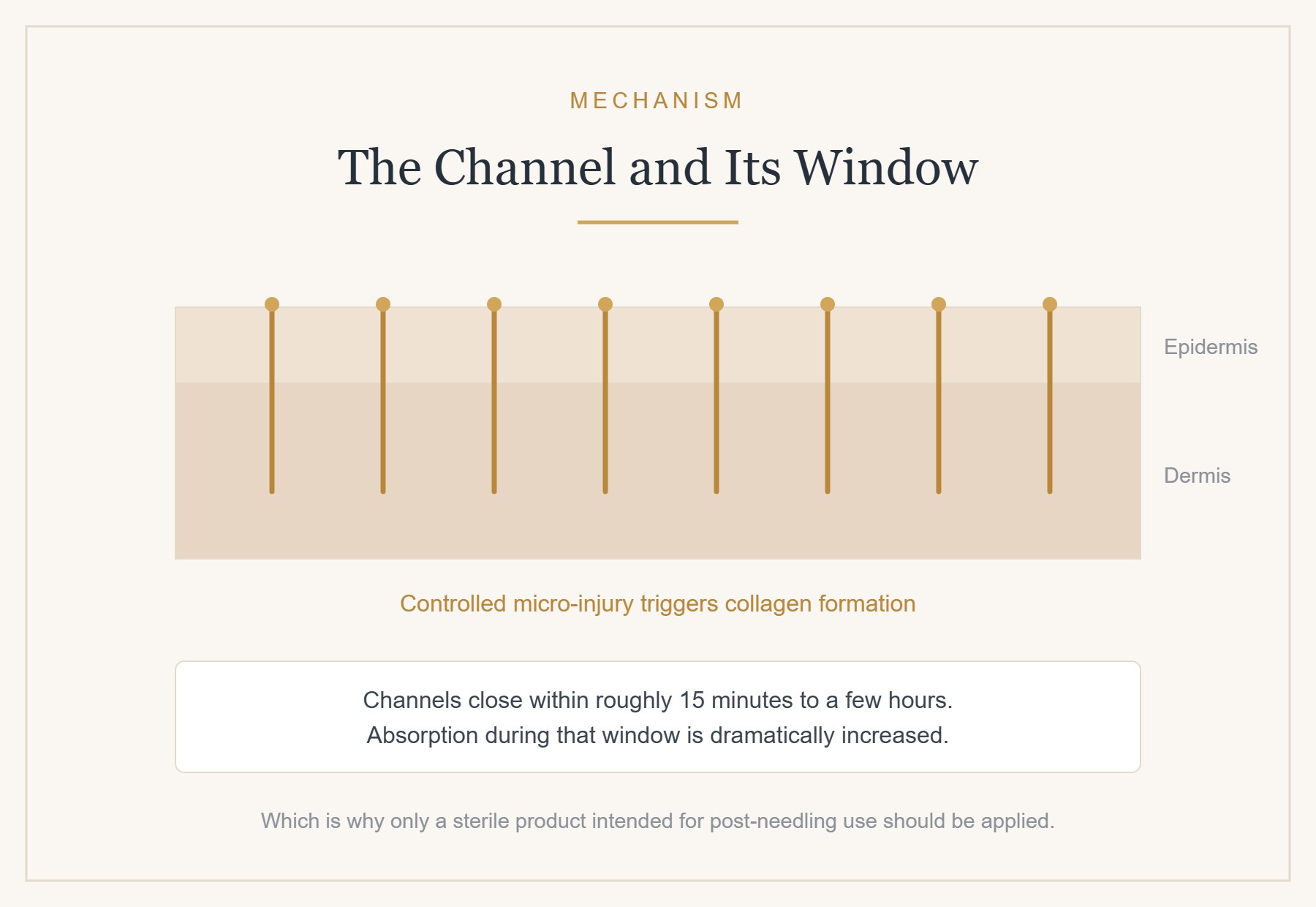
Microneedling creates thousands of controlled micro-injuries through the epidermis into the upper dermis using fine needles, typically at depths between 0.5 mm and 2.5 mm depending on the target.
The mechanism is deliberate injury. Each channel triggers a wound-healing cascade: platelet aggregation and release of signalling molecules, an inflammatory phase, then a proliferative phase in which fibroblasts are recruited and lay down new collagen and elastin. Over subsequent weeks the new collagen remodels and matures. The result is a modest but real improvement in skin thickness, texture and the appearance of scars.
This matters for understanding the growth factor question, because the injury itself is the active treatment. Microneedling has reasonable evidence behind it for acne scarring in particular, along with texture, fine lines and enlarged pores. Whatever is applied afterwards is an adjunct to that process rather than the thing doing the work.
The Window That Creates Both the Opportunity and the Risk
The channels created by needling do not stay open long. Studies using imaging techniques suggest that most close within around fifteen minutes to a few hours, with barrier function largely restored within a day.
During that window, absorption of anything applied to the skin is dramatically increased. This is the entire rationale for applying an active product immediately after needling — and it is also the reason the practice carries a specific danger that is frequently overlooked.
What “Growth Factors” Actually Means
Growth factors are signalling proteins that regulate cell division, migration and matrix production. In skin, the relevant ones include transforming growth factor beta, epidermal growth factor, vascular endothelial growth factor, and platelet-derived growth factor. They are genuinely central to wound healing and collagen synthesis.
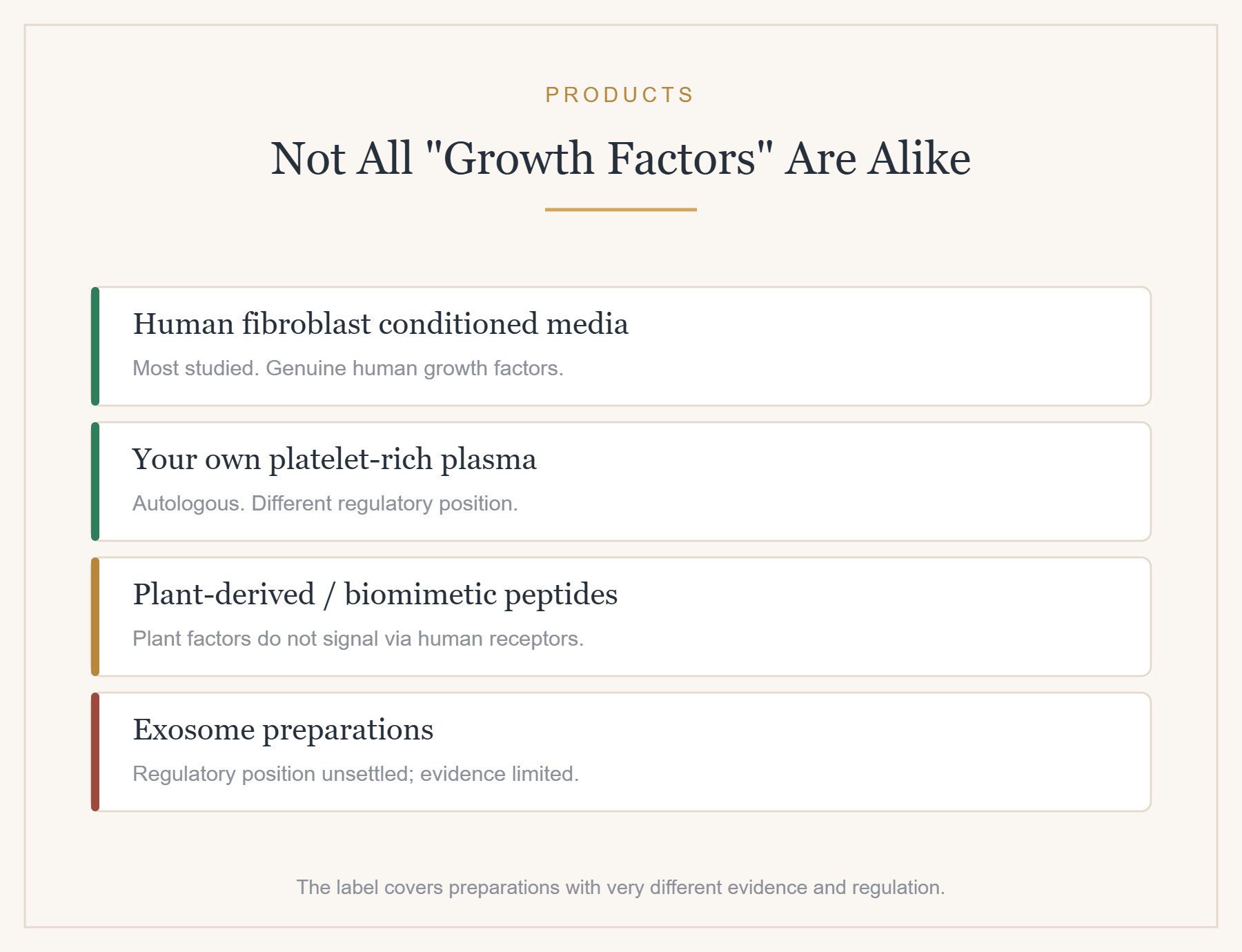
The question is what is in the bottle. Preparations sold for use with microneedling fall into distinct groups.
Human fibroblast conditioned media. Human fibroblasts are cultured in a laboratory and the medium they secrete proteins into is collected and processed. This is the most studied category, and it contains a genuine mixture of human growth factors and cytokines. It is also the most expensive.
Plant-derived and biomimetic preparations. These contain plant stem cell extracts or synthetic peptides designed to mimic growth factor activity. Plant growth factors do not signal to human cells through the same receptors, so the mechanism claimed on the packaging often does not survive scrutiny. Some peptides in this category do have supporting data of their own; the marketing simply tends to borrow the language of human growth factors.
Platelet-rich plasma. Your own blood is drawn and centrifuged to concentrate platelets, which release your own growth factors. This is autologous, which removes concerns about foreign material and places it in a different regulatory category. The trade-off is that concentration and composition vary between people and between preparation protocols.
Exosome products. Marketed heavily and often at high prices. Regulatory position in many jurisdictions is unsettled, and clinical evidence in aesthetic dermatology remains limited relative to the claims made.
What the Evidence Supports
Several small randomised and split-face studies have compared microneedling with growth factor application against microneedling alone, most often in acne scarring and photoageing, and several report modest additional benefit from the combination.
Three caveats belong alongside that. The studies are typically small, often twenty to fifty participants. Many are funded by or connected to the companies producing the serums. And the products tested differ from one another, so a result obtained with one conditioned media preparation says little about a different manufacturer’s plant-derived serum.
The reasonable summary is that adding growth factors to microneedling is plausible, supported by limited positive data, and probably produces a modest incremental improvement in some patients. It is not the transformative difference that pricing sometimes implies, and it does not convert a treatment that would not have worked into one that does.
The Safety Point That Matters Most
Because microneedling temporarily removes the skin barrier, anything applied afterwards enters the skin far more readily than it would normally. That includes ingredients never intended to be delivered into the dermis.
There are documented cases of granulomatous reactions — persistent inflammatory nodules — following application of ordinary cosmetic products onto freshly needled skin. Vitamin C serums formulated for surface use, products containing fragrance, and preparations with preservatives appropriate for topical but not intradermal exposure have all been implicated.
The rule is straightforward and worth asking about directly: only a sterile product specifically intended for post-needling application should be used. A clinic applying whatever serum is on the shelf is taking a risk on your behalf.
What a Course Involves
Topical anaesthetic is applied for twenty to forty-five minutes. Needle depth is selected by area and indication — shallower on the forehead and around the eyes, deeper over acne scarring on the cheeks. Passes are made in multiple directions until controlled pinpoint bleeding appears at the treatment depth. The chosen serum is applied during and immediately after.
A typical course is three to six sessions spaced four weeks apart. Acne scarring generally needs the higher number and deeper settings; general texture and glow require fewer and shallower.
Recovery
Redness resembling moderate sunburn for one to three days is expected, sometimes followed by light flaking. Deeper treatment can produce pinpoint bruising. Makeup is usually avoided for twenty-four hours, active ingredients such as retinoids and acids for around five days, and rigorous sun protection is essential throughout — particularly relevant in Dubai, where post-inflammatory pigmentation is a real risk in the skin types most commonly treated.
What It Realistically Improves
Being specific about indications helps set expectations, because microneedling performs very differently across them.
Atrophic acne scarring is where it performs best, and where the evidence is strongest. Rolling and boxcar scars respond better than narrow ice-pick scars, which often need a different technique such as focal chemical reconstruction. Improvement is typically partial rather than complete — a meaningful softening rather than erasure, and anyone promising clearance is overselling.
Skin texture and enlarged pores respond reasonably well. Pores do not shrink in the literal sense, but improved dermal support around them makes them less noticeable.
Fine lines improve modestly through increased dermal collagen. Deeper static wrinkles and lines caused by muscle movement are not the target, and expecting needling to address them leads to disappointment.
Stretch marks show some response, particularly newer red-purple ones. Mature white striae are considerably more resistant.
Overall skin quality — the general improvement in firmness and radiance patients describe — is real but gradual, and best assessed over a completed course rather than session by session.
When Microneedling Is Not the Right Choice
Active acne, particularly inflammatory or cystic lesions, should be controlled first, since needling through active infection spreads it. Active skin infection of any kind, including cold sores in the treatment area, defers treatment. A history of keloid scarring warrants caution.
Melasma deserves specific mention. Microneedling is an inflammatory treatment, and melasma-prone skin responds to inflammation by producing more pigment. It has a role in stable, well-controlled melasma alongside other measures, but it is not a sensible first step, and I have set out the alternatives in more detail in the guide to melasma treatment in Dubai.
Radiofrequency Microneedling Is a Different Treatment
Clinics increasingly offer radiofrequency microneedling, and patients often assume it is simply a better version of the same thing. It is not the same treatment.
In radiofrequency microneedling, insulated needles deliver energy at a controlled depth, producing thermal injury in the dermis in addition to the mechanical channels. The added heat drives collagen contraction and remodelling more aggressively, which gives it a stronger effect on skin laxity and on deeper acne scarring.
The trade-offs are real. Downtime is longer, discomfort is greater, cost is higher, and — the point that matters most in this region — the thermal component carries a higher risk of post-inflammatory hyperpigmentation in darker skin types. Conservative settings and careful patient selection matter more here than with conventional needling.
Neither treatment is universally superior. Conventional microneedling with a well-chosen serum is often the better choice for texture, early photoageing and mild scarring in pigment-prone skin. Radiofrequency devices earn their place where laxity or established scarring is the dominant concern.
Getting Value From a Course
Three practical points separate patients who are pleased with the outcome from those who are not.
Complete the course before judging. Collagen remodelling continues for months after the final session. Assessing at session two and concluding it has not worked is the most common reason people abandon a treatment that was on track.
Photograph properly. Same lighting, same angle, no makeup, taken before the first session. Texture change is gradual and the eye adapts to it, which is why patients frequently underestimate their own improvement.
Protect the investment. Daily sun protection is not optional afterwards, particularly in Dubai. Ultraviolet exposure degrades the collagen the treatment was designed to build, and in pigment-prone skin it converts a successful session into a pigmentation problem. Any clinic that performs a course of needling without discussing photoprotection has skipped the part that determines whether the result lasts.
Costs in Dubai
Market rates for microneedling generally run from around AED 800 to AED 2,000 per session. Protocols using human conditioned media, PRP or exosomes sit at the upper end, and a course of three to six sessions is normally priced as a package.
Since a single session rarely produces the result being sought, the course price is the meaningful figure. A low per-session rate across eight required sessions is not a saving.
The Short Version
Microneedling is a well-evidenced treatment for texture and atrophic acne scarring, and the needling itself is what produces the result. Growth factors are a reasonable adjunct supported by limited positive data, not the active ingredient the pricing sometimes implies.
Two questions matter more than which serum is used: whether the product applied is sterile and intended for post-needling use, and whether your skin type and current condition make needling appropriate at all. A clinic that engages seriously with both is more likely to deliver a good outcome than one selling the most expensive serum on the menu.
Frequently Asked Questions
Do growth factors actually add anything to microneedling?
The evidence is suggestive rather than conclusive. Microneedling alone has good data for texture, scarring and fine lines. Adding growth factors shows benefit in several small studies, but trials are limited and often industry-linked. It is a reasonable enhancement, not the main event.
Are growth factors the same as PRP?
No. Platelet-rich plasma is made from your own blood and contains your own platelet-derived growth factors. Commercial growth factor serums are manufactured products, most often derived from cultured human fibroblasts or plants. PRP is autologous, which changes both the safety profile and the regulatory position.
Is it safe to apply a serum immediately after needling?
Only if the product is intended and sterile for that use. Microneedling temporarily removes the skin barrier, so anything applied enters far more readily. Applying a standard cosmetic serum onto freshly needled skin is a genuine cause of granulomatous reactions.
How many sessions will I need?
Three to six sessions spaced four weeks apart is the usual course, with the number depending on whether the goal is general texture or acne scarring. Scarring typically requires more sessions and a deeper needle depth.
When will I see results?
Superficial glow appears within a week, but the meaningful change is collagen remodelling, which takes eight to twelve weeks after a session and continues over the course. Judging results after one treatment is premature.
Does it hurt?
With topical anaesthetic applied for the correct length of time, most patients tolerate it comfortably. Deeper settings used for scarring are more uncomfortable than superficial passes done for glow.
What is the downtime?
Redness resembling sunburn for one to three days, sometimes with light flaking afterwards. Deeper treatments can leave pinpoint bruising. Makeup is usually avoided for twenty-four hours.
Can I have it if I have melasma?
With caution and rarely as a first step. Microneedling is inflammatory, and melasma-prone skin responds to inflammation with more pigment. It can have a role in stable, well-controlled melasma but should not be the opening move.
Is home microneedling with a dermaroller worth doing?
Home rollers are too short to produce meaningful collagen change and are difficult to keep sterile. The realistic outcome is better product penetration, along with a real risk of irritation and infection if the device is reused.
How much does it cost in Dubai?
Market rates generally run from around AED 800 to AED 2,000 per session, with growth factor or PRP protocols at the upper end. A course of three to six sessions should be priced as a package rather than judged per session.
This article is general information about aesthetic and dermatological treatments and is not medical advice, a diagnosis, or a treatment recommendation for any individual. Outcomes vary between patients and no result is guaranteed. Prescription medications carry risks and contraindications that must be assessed by a licensed physician during a personal consultation. Dr Soheila Eskandari is licensed by the Dubai Health Authority. Prices quoted are general market ranges for information only and are not an offer.


 English
 Arabic