
Neck Lines Treatment in Dubai: Horizontal Lines, Bands and Crepey Skin
Neck Lines Treatment in Dubai: Horizontal Lines, Bands and Crepey Skin
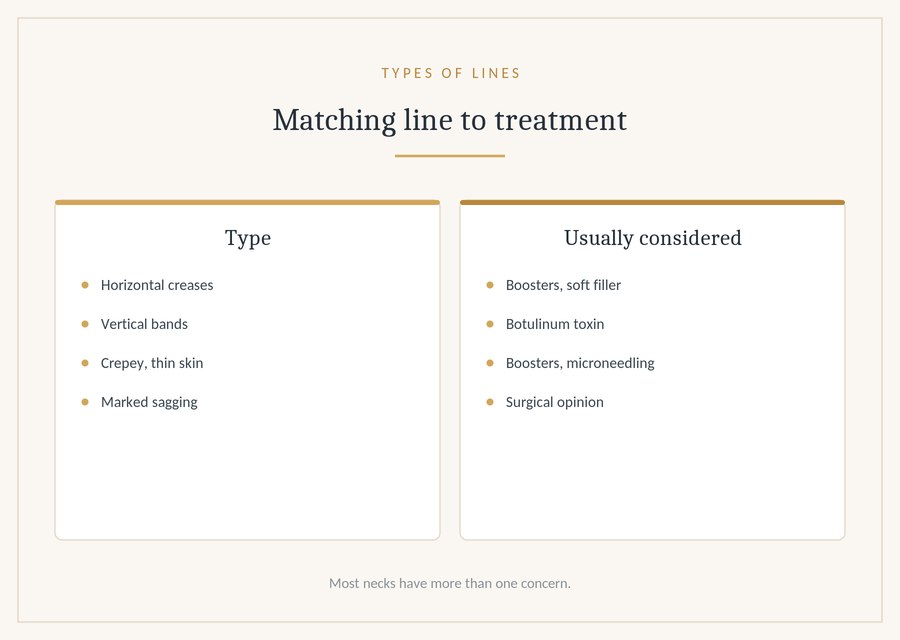
Neck lines treatment in Dubai depends on the type of line. Horizontal creases that ring the neck usually respond to treatments that improve the skin, such as skin boosters, microneedling and, for deeper creases, very small amounts of soft hyaluronic acid filler, while vertical bands come from the platysma muscle and are softened with botulinum toxin. Crepey, thin skin and laxity need skin quality treatments or collagen stimulators, and marked sagging is a surgical question.
This guide explains the main types of neck lines and what causes them, how to tell which type you have, the options for each, how plans are combined, what results to expect, the risks and who should avoid treatment. It also covers costs in Dubai. Results vary between people, and suitability must be confirmed in person by a licensed physician.
What Types of Neck Lines Are There?
Horizontal lines
Horizontal lines run around the front and sides of the neck, often in two or three parallel creases. They are sometimes called necklace lines. Some people have them from their twenties because of the way their skin and underlying tissue are attached, and they tend to deepen with age, sun exposure and repeated bending of the neck, for example when looking down at a phone, which has led to the informal name tech neck.
Vertical bands
Vertical bands are cords that run from under the jaw towards the collarbones. They are the front edges of the platysma, a thin sheet of muscle, and become more visible with age, particularly when you speak or tense the neck. Because they come from muscle, they behave differently from creases in the skin.
Crepey skin and laxity
The skin of the neck is thinner than the skin of the face and has fewer oil glands. Over time it loses collagen, elastin and hydration, and it can look crepey, with fine criss-cross lines, or start to sag. Sun damage often adds uneven colour, redness and roughness, especially on the sides of the neck.
What Causes Neck Lines?
Several factors usually combine. Genetics influence the thickness of the skin and the depth of natural creases. Sun exposure breaks down collagen and elastin, and the neck is often left out of daily sun protection, which matters in a sunny climate like Dubai’s. Repeated bending of the neck, weight changes, smoking and hormonal changes around menopause also play a part. Understanding which factors apply helps decide which treatments are worth considering.
How Can I Tell Which Type I Have?
A simple check in the mirror helps. Look straight ahead with your neck relaxed: lines that are visible now are static creases or skin changes. Then tense your neck, as if grimacing: cords that appear or become more prominent are platysmal bands. Look at the skin in good light for crepey texture, fine lines and uneven colour. A physician examines the neck at rest and in movement and also looks at the jawline and lower face, because they affect how the neck looks.
Which Treatments Are Used for Neck Lines?
معززات البشرة
Skin boosters are injected to improve hydration, texture and fine lines. Profhilo, a high-concentration hyaluronic acid that spreads under the skin, is commonly used on the neck, as are products that combine hyaluronic acid with amino acids or nutrients, such as Sunekos, Jalupro and NCTF. A course usually involves two to four sessions, and changes develop gradually. Our guides to بروفيلو و سونيكوس explain how they differ.
Soft filler for deeper horizontal creases
Deep horizontal creases can be softened with very small amounts of a soft hyaluronic acid filler placed carefully along the line. The skin of the neck is thin, so filler placed too close to the surface can show as a bluish tinge or a visible ridge. This is why only soft products and small amounts are used, and why treatment is often staged. Because the filler is hyaluronic acid, it can be dissolved if needed.
Botulinum toxin for bands
Vertical bands respond to botulinum toxin injected into the platysma, often together with injections along the jawline, an approach known as the Nefertiti lift. Small doses are sometimes also used along horizontal lines, which is an off-label use. Our article on the Nefertiti lift explains who it suits and its risks, including rare effects on swallowing.
Collagen stimulators
For thinning skin and mild laxity, collagen stimulators such as calcium hydroxylapatite diluted with saline are sometimes used across the neck. They prompt the skin to produce new collagen over several months. This use is off-label and the evidence is still developing, so it is planned carefully and conservatively. Our guide to المحفزات الحيوية للكولاجين describes the products involved.
Microneedling and peels
Medical microneedling creates tiny controlled injuries that prompt the skin to repair itself, which can improve texture and fine lines over a course of sessions. Gentle chemical peels can help with roughness and uneven colour. The neck heals more slowly than the face, so settings are lighter. Our article on الوخز بالإبر الدقيقة explains the procedure.
When surgery is the better option
Marked loose skin, heavy bands and fat under the chin may not respond enough to injectables. In these cases a surgical neck lift may be the more appropriate option, and an honest assessment should say so.
Why Do Some People Get Neck Lines Early?
Horizontal neck creases in people in their twenties and thirties are common and are often not a sign of ageing. They reflect how the skin is anchored to the deeper tissues, the amount of fat in the neck and natural skin thickness, and they run in families. Weight loss can make them more visible, and so can posture that keeps the neck bent for long periods. Early creases often respond well to skin quality treatments and, where deeper, to very small amounts of soft filler, but expectations should still be realistic, because the anchoring that creates the crease remains.
What About the Chest?
The décolletage, the area of the upper chest below the neck, often shows the same changes: crepey texture, fine vertical lines between the breasts that can deepen from sleeping on one side, and sun damage with uneven colour. The same skin quality treatments are often used, and the neck and chest are frequently treated together. Sun protection on the chest is just as important as on the face.
How Are Treatments Combined?
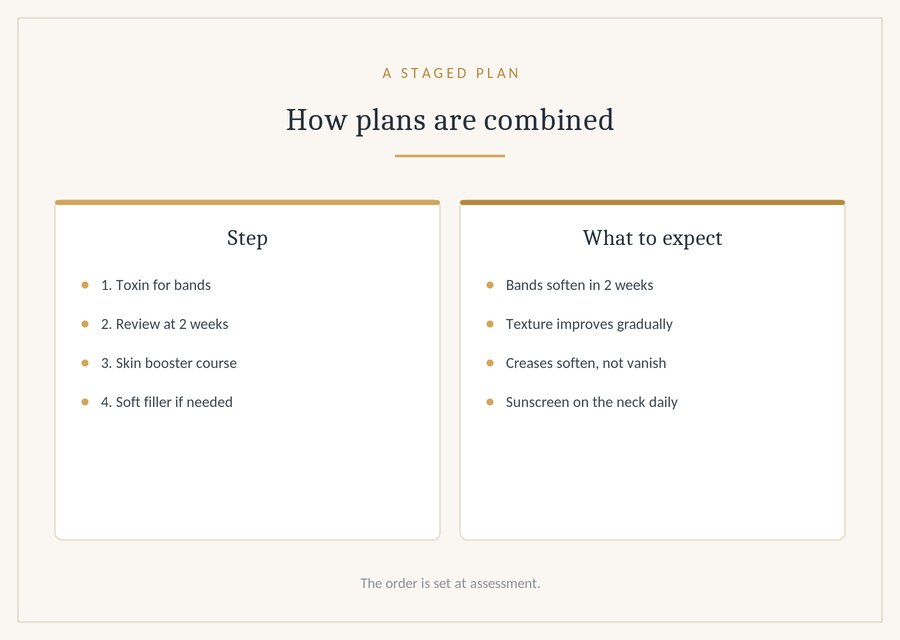
Most necks have more than one concern, so plans often combine treatments in stages. A common sequence is to treat bands with botulinum toxin first, review at around two weeks, and then begin a skin booster course for texture, adding a small amount of soft filler to any deep creases that remain. Microneedling or peels may be added later. Treatments in the same area are spaced out so that swelling from one does not affect the assessment of another. Our article on caring for the neck describes the main options in context.
What Results Can I Expect?
Improvement is gradual and subtle rather than dramatic. Skin boosters usually show changes in hydration and texture over several weeks after a course. Botulinum toxin softens bands within a couple of weeks, and the effect lasts around three to four months. Filler softens creases straight away, apart from swelling, and usually lasts several months to a year. Horizontal lines that have been present for many years often soften rather than disappear. Photographs taken before treatment and after each stage are the most reliable way to judge the change.
Maintenance is part of most neck plans. Skin booster results fade gradually over months, so many people repeat a session every six months or so. Botulinum toxin for bands is usually repeated every three to four months if you wish to keep the effect, and filler in creases is topped up only after an assessment of what remains. Because the neck keeps ageing and is exposed to the sun, the plan is reviewed over time rather than fixed at the start, and treatments that are no longer needed can be stopped.
What Can I Do at Home?
Daily broad-spectrum sunscreen on the neck and chest, not only the face, is the most useful habit. A moisturiser suited to your skin and, if your physician agrees, a retinoid product introduced gradually can support skin quality. Holding your phone at eye level more often and taking breaks from looking down may reduce repeated creasing, although its effect on established lines is uncertain. Not smoking helps skin quality throughout the body.
How Should I Prepare, and What Aftercare Is Needed?
Tell the physician about all medicines and supplements, as aspirin, fish oil and some herbal products increase bruising; do not stop a prescribed medicine without advice from the doctor who prescribed it. Bruising on the neck can be visible, so plan treatments away from events where your neck will be on show. After injections, avoid strenuous exercise, saunas and strong heat for a day or two, avoid tight collars or necklaces that rub the area, and do not massage unless asked to. After microneedling or peels, gentle skincare and strict sun protection are needed while the skin recovers.
What Are the Risks?
Redness, swelling, tenderness and bruising are common after injections in the neck and usually settle within days. Small bumps after skin boosters flatten within hours to a day. Filler placed too superficially can show as lumps or a bluish tinge. Botulinum toxin in the neck can, uncommonly, cause neck weakness, a change in voice or difficulty swallowing, which needs urgent attention. Infection, allergic reactions and, rarely, vascular problems can occur with any injection. Microneedling and peels can cause redness, and in some skin types temporary darkening.
Who Should Avoid Neck Treatments?
Injectable treatments are usually postponed during pregnancy and breastfeeding and when there is infection or inflammation in the area. They are avoided in people with a known allergy to the product. Botulinum toxin is avoided in neuromuscular conditions and in people with existing swallowing or breathing problems. People with autoimmune conditions, bleeding disorders, a tendency to keloid scarring or those taking blood-thinning medicines need a careful assessment first. A licensed physician must confirm suitability in person.
اختيار من يعالجك
The neck has thin skin and important structures close to the surface, so choose a licensed physician whose DHA licence you can verify on the DHA Sheryan portal and who treats the neck regularly. Ask which type of lines you have, why each proposed treatment suits them, how many sessions are planned and what the total cost is.
The page on خطوط وتجاعيد الرقبة describes how this concern is approached. At dr-soheila.com, treatments are planned and performed by الدكتورة سهيلة إسكندريطبيب عام مرخص من هيئة الصحة بدبي، يتمتع بصلاحيات تجميلية ولديه خبرة 20 عامًا في طب التجميل.
النسخة المختصرة
Neck lines come in different types. Horizontal creases and crepey skin respond mainly to skin quality treatments, such as skin boosters, microneedling and peels, with small amounts of soft filler for deeper creases. Vertical bands come from the platysma muscle and are softened with botulinum toxin. Thinning skin may benefit from collagen stimulators, and marked sagging needs a surgical opinion.
Plans are often combined in stages, results are gradual and subtle, and long-standing lines usually soften rather than disappear. Bruising and swelling are common, while lumps, voice or swallowing changes and vascular problems are uncommon. Daily sun protection on the neck matters, and a licensed physician must assess suitability in person.
أسئلة تستحق الطرح
Which type of neck lines do I have? The answer decides which treatments make sense.
Why do you suggest this combination, and in what order? A clear sequence helps you judge each step.
How many sessions are needed, and what is the total cost? Skin quality treatments usually involve a course.
What change can I realistically expect? Long-standing lines often soften rather than disappear.
الأسئلة الشائعة
What causes horizontal neck lines?
Genetics, thinning skin, sun damage and repeated bending of the neck all contribute, and some people have natural creases from a young age.
What is the treatment for horizontal neck lines?
Skin boosters, microneedling and peels improve the skin, and very small amounts of soft hyaluronic acid filler can soften deeper creases.
What are vertical neck bands?
They are the edges of the platysma muscle, which become more visible with age and are usually softened with botulinum toxin.
Can Botox help neck lines?
It softens vertical bands, and small doses are sometimes used along horizontal lines off-label, but it does not improve crepey skin or sagging.
Can filler be used for neck lines?
Yes, very small amounts of a soft hyaluronic acid filler can soften deep creases, placed carefully because the skin is thin.
Is Profhilo good for the neck?
Profhilo is commonly used on the neck to improve hydration and crepey texture, usually as two sessions about four weeks apart.
How many sessions are needed for neck lines?
Skin booster courses usually involve two to four sessions, and combined plans may continue over a few months.
What are the risks of neck treatments?
Bruising and swelling are common; lumps, a bluish tinge from filler, neck weakness or swallowing changes from toxin, infection and vascular problems are uncommon or rare.
Who should avoid neck treatments?
People who are pregnant or breastfeeding, have infection at the site or relevant allergies, and, for toxin, those with neuromuscular or swallowing problems should avoid them.
What does neck lines treatment cost in Dubai?
Market rates generally run from around AED 1,000 to AED 3,000 per skin booster session and around AED 800 to AED 2,000 for toxin to the neck, with filler priced per syringe, so ask for a written quote for the full plan.
هذه المقالة معلومات عامة حول العلاجات التجميلية والجلدية، ولا تُعدّ نصيحة طبية أو تشخيصًا أو توصية علاجية لأي فرد. تختلف النتائج من مريض لآخر، ولا يوجد ضمان لأي نتيجة. تنطوي الأدوية الموصوفة والمنتجات القابلة للحقن على مخاطر وموانع استخدام يجب تقييمها من قبل طبيب مرخص خلال استشارة شخصية. الدكتورة سهيلة إسكندري مرخصة من قبل هيئة الصحة بدبي. الأسعار المذكورة هي نطاقات السوق العامة لأغراض المعلومات فقط، وليست عرضًا.


 Arabic
 English